

The culture component and why it matters in management
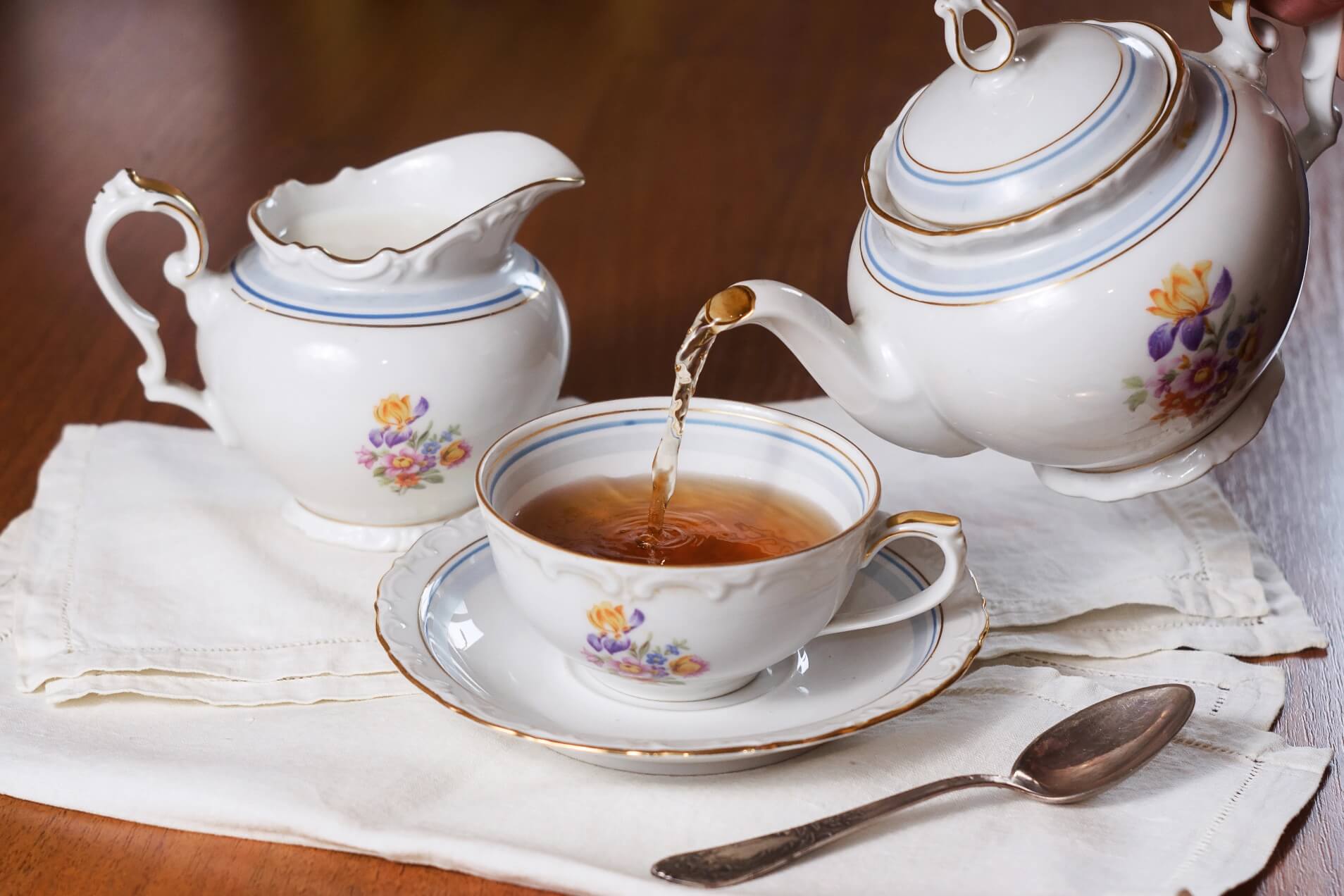
Let me start with what might at first appear to be a personal story unrelated to cross-cultural management. After a family dinner many decades ago, I decided to play a trick on my father: I made a point of noisily slurping my tea. Hearing the loud slurp, my father turned toward me and raised his voice: “Stop slurping.” My mother burst into laughter. She had noticed that my slurping was intended to point out to my father that he had been the one doing the slurping.
My father scolded me because he knew that slurping one’s tea was wrong but at the same time he was totally unaware of his own culturally inappropriate behavior. I use the word “culturally” because my father had spent his childhood in a small town in Hungary’s rural northeast where table manners were generally relaxed. My mother, on the other hand, had spent her youth in a bourgeois neighborhood in Budapest where how one sipped one’s tea defined one’s place in society.
When differences in culturally ingrained behavior become evident among family or friends, participants laugh off the incident. In business environments, however, lack of awareness of culture-bound differences can undermine trust. Among Japanese, for example, time-awareness is seen in moral-ethical terms. Many of us know the “five minute rule” namely the need to show up not merely on time for a business meeting but five minutes early. Tardiness is seen as a character flaw. It can be a deal-breaker.
In North America, however, being a few minutes late is not even cause for an excuse. I saw this difference undermine trust between the American foundation I represented in Japan and the Japanese newspaper whose chief editorial writer I had invited to give a talk to foundation board members visiting from the US. The visitors showed up to the meeting about ten minutes late, all of them with Starbucks coffee cups in hand. They had kept the prominent Japanese speaker waiting so they could get their daily caffein fix. The meeting did not go well.
But why do Japanese react so badly to North Americans being literally just a few minutes late? Is this reaction rational? Will a five-minute or even ten-minute delay really result in a less efficiently run meeting? Yes, but only if one considers that the perceived rudeness of the American side has ruined the atmosphere. So, why not show up on time, or better still, show up five minutes ahead so as to fulfill the expectations of the Japanese side?
But being loose with time is also culturally ingrained. So, by the same token, the Japanese side might do well to take into account the culturally determined behavior of North Americans who are not being willfully rude.
The above two examples are but the tip of an iceberg of culturally determined differences in behavior. The good news is that for many decades now, such differences have been the subject of serious academic research, much of it inspired by the writings of the anthropologist Edward T Hall, author of the 1959 international bestseller, The Silent Language, translated into Japanese as 沈黙の言葉 (Chinmoku no kotoba). To give an idea of the importance of this book, its Japanese translator was Masao Kunihiro, chief foreign policy advisor to Prime Minister Miki Takeo.
In the 1950s, Hall worked in Washington DC for the Foreign Service Institute, where, among other languages, Japanese had begun to be taught to young US diplomats. Hall discovered that the more competent American diplomats were in speaking Japanese the less effective they were in the field. This was because they were taught Japanese language without any cultural context. In other words, the Silent Language was in large part inspired by communication issues involving Japanese and non-Japanese.
Among other anthropologists who helped build the basis for cross-cultural training was Harumi Befu who described in detail Japanese rituals such as gift-giving and “omotenashi” or entertainment, especially at Japanese restaurants. He made the point that many foreigners are so overwhelmed by Japanese gift-giving and entertainment that they become convinced that — as one assistant to a Canadian provincial premier visiting Japan told me — “The Japanese love us.” In fact, such entertainment is ritual.
Befu, who taught at Stanford, went to pains to point out that Americans too engage in rituals, such as for example insisting on showing first time visitors to their home every room of the house: “And this is the children’s bathroom…” As Befu observed, all cultures have silent languages. A Japanese or German or Portuguese may speak excellent English but deciphering the meaning of being shown the master bedroom, or the den, or the basement, requires more than knowledge of grammar. The American host is saying “mi casa es su casa” (my home is your home) or in English, “Please make yourself feel at home.”
The Japanese sociologist, Hiroko Nishida went one step further: she used “schema” theory – the idea that cultural behavior is wired into the brain very early in life – to demonstrate that behavioral change is challenging, that it requires repeated reinforcement, and training – which is why we are here today.
Interestingly enough, executives used to being “in control” often face the greatest challenges in accommodating their behavior. Understanding cultural difference is an important first step. But “becoming the Other” is not the goal. It is when foreign executives and local staff learn to respond to the other’s expectations that accommodation takes place and the foundations can be laid for a harmonious, productive and mutually satisfying corporate culture unique to each organization.
Related articles
31. Welcome to Preboard【Column: Leap Before You Look】
Something caught my attention while waiting to board flights in Japan. I am used to hearing an

30. How to Say Good-Bye【Column: Leap Before You Look】
When my dad passed away 6 years ago, Japan had just closed its borders. Nobody was permitted to ente

29. Tinkle Tinkle Little Star【Column: Leap Before You Look】
Recently, I was at a storytelling event where I heard an 洞察力に富み興味深い (insightful and intriguing) stor