

31. Welcome to Preboard【Column: Leap Before You Look】
Something caught my attention while waiting to board flights in Japan. I am used to hearing announcements indicating 優先搭乗 (priority boarding) of certain groups of people – active military personnel, passengers requiring special assistance, families with young children, and don’t forget those special people with エリート会員資格 (elite status memberships).
In Japan, there’s no announcement to allow active 自衛隊 (self-defense force) personnel to preboard; however, there’s a specific announcement informing “妊娠中のお客様 (pregnant passengers)” to step up and preboard. This announcement stood out to me. I don’t remember hearing it in the US.
I was curious enough to look it up. In the US, most airlines offer preboarding for any customer who needs extra time or a specific seat for medical reasons, which is widely extended to pregnant passengers upon request at the gate. But there generally is not a 包括的な方針 (blanket policy) that automatically preboards pregnant women.
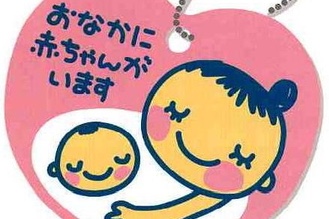
How does this work in Japan? Do you have to 証明する (prove) that you’re pregnant? I’ve heard of マタニティータグ (Maternity Tag), a pink, heart-shaped keychain featuring a baby in the womb, introduced by Japan’s 厚生労働省 (Ministry of Health, Labour and Welfare) back in 2006. It is supposed to alert the public that you are pregnant so you can access priority seating on trains and receive assistance in emergencies.
Some Japanese women report feeling uneasy wearing Maternity Tags in public. I’m surprised it is only “some” women, not all of them. In my view, this is 個人情報 (private information); the public has no business knowing if you’re pregnant or not. In addition, I’m afraid such a tag can be perceived as a sign of 遠回しな攻撃 (passive-aggressiveness).
I went to the ANA website and learned that “Passengers who are within 28 days of their expected delivery date are required to complete a medical certificate before boarding and bring it to the airport on the day of your flight.” I wondered if the same applies to the US airlines. The answer is yes. Most 航空会社 (carriers) require a doctor’s note or medical certificate if you are traveling within 4 weeks (28 days) of your expected delivery date. This note usually needs to be dated within 48 to 72 hours of your departure.
After learning all these details, I have a renewed 敬意 (admiration) for pregnant women. In addition to their physical challenges, they have to deal with people who feel awkward about announcements at airport gates and the tags pregnant women may or may not carry. Given 少子化が進む (the ever-declining birthrate) in Japan, the preboarding announcement reflects a sentiment that it is essential to show special consideration and support for pregnant women. To all mothers-to-be: you are creating a 奇跡 (miracle); you are strong, capable, and beautiful. You’ve got this!
Related articles

32. All My Relations【Column: Leap Before You Look】
Recently I participated in an interview conducted by a college student who is researching 日本の伝統と文化 (

30. How to Say Good-Bye【Column: Leap Before You Look】
When my dad passed away 6 years ago, Japan had just closed its borders. Nobody was permitted to ente
29. Tinkle Tinkle Little Star【Column: Leap Before You Look】
Recently, I was at a storytelling event where I heard an 洞察力に富み興味深い (insightful and intriguing) stor