

32. All My Relations【Column: Leap Before You Look】
Recently I participated in an interview conducted by a college student who is researching 日本の伝統と文化 (Japanese heritage and culture). One of the questions was: “What do you identify as the most important or distinct practices of Japanese culture?” The question sounded simple enough, but I realized it was not that easy to answer.
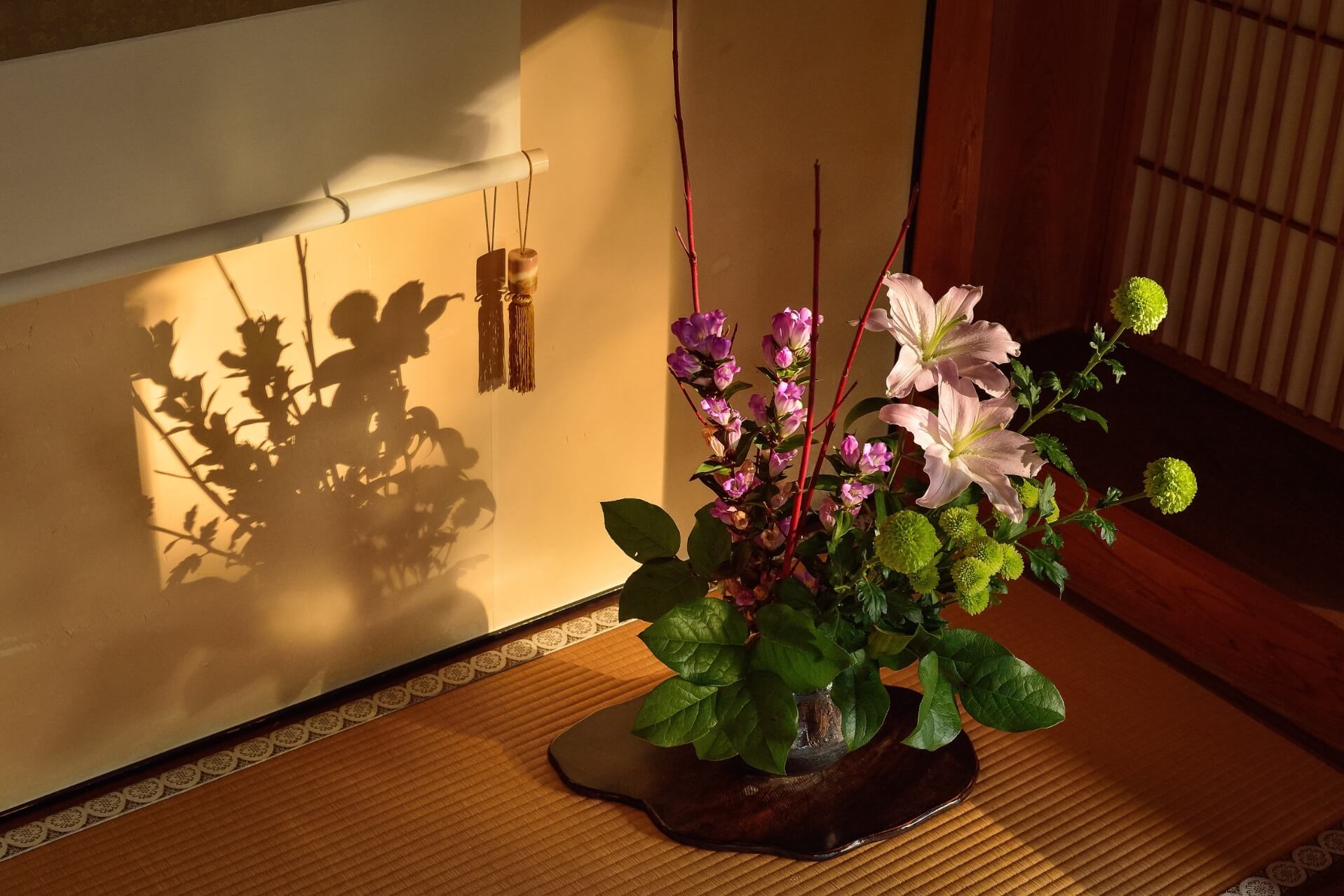
This may sound silly, but I believe I learned more about my own culture (i.e., Japanese culture) after I moved out of the country. When I was living in Japan, I never was interested in 茶道 (sado, or Tea Ceremony) or 生け花 (ikebana, or The Art of Japanese Flower Arrangement). I considered them as a part of 花嫁修行, a traditional training Japanese women would undergo to prepare for marriage. So, of course, I 軽視する (pooh-poohed) them.
But guess what. I started taking 生け花 (ikebana) courses after so many years of living in the US, and to my surprise, I really enjoyed it. Ikebana focuses on appreciating nature’s beauty, including its 不完全さとはかなさ (imperfection and transience). It embraces minimalism, harmony, and negative space while learning to look into yourself.
Another interesting aspect about me studying 生け花 in the US was that my 先生 (sensei, or master) was not Japanese. Originally, I had this baseless prejudice against non-Japanese teaching any Japanese arts. I tended not to trust them.
Eventually I realized that if you put your mind into something, nationality shouldn’t matter. There are many foreign practitioners of Japanese arts, and that is encouraging and uplifting. This should not be something reserved for us Japanese only. There’s a universal attraction and people can connect through these arts – and have a wonderful experience.
Nowadays, you can gather so much information about other cultures by entering some key words in search engines. You can also duplicate things so well by watching some YouTube videos. We may be at a crossroads where we need to redefine what cultural appropriation is. As long as the culture is appreciated, understood, and respected, I believe it shouldn’t be called cultural appropriation. We need to keep in mind the intention and the context.
Returning to the question I was asked – “What do you identify as the most important or distinct practices of Japanese culture?” I would answer this – “I identify with the quiet, contemplative way of thinking and deliberate, harmonious way of living.” Now, I must ask you – What do YOU identify as the most important or distinct practices of your own culture?
Related articles
31. Welcome to Preboard【Column: Leap Before You Look】
Something caught my attention while waiting to board flights in Japan. I am used to hearing an

30. How to Say Good-Bye【Column: Leap Before You Look】
When my dad passed away 6 years ago, Japan had just closed its borders. Nobody was permitted to ente
29. Tinkle Tinkle Little Star【Column: Leap Before You Look】
Recently, I was at a storytelling event where I heard an 洞察力に富み興味深い (insightful and intriguing) stor